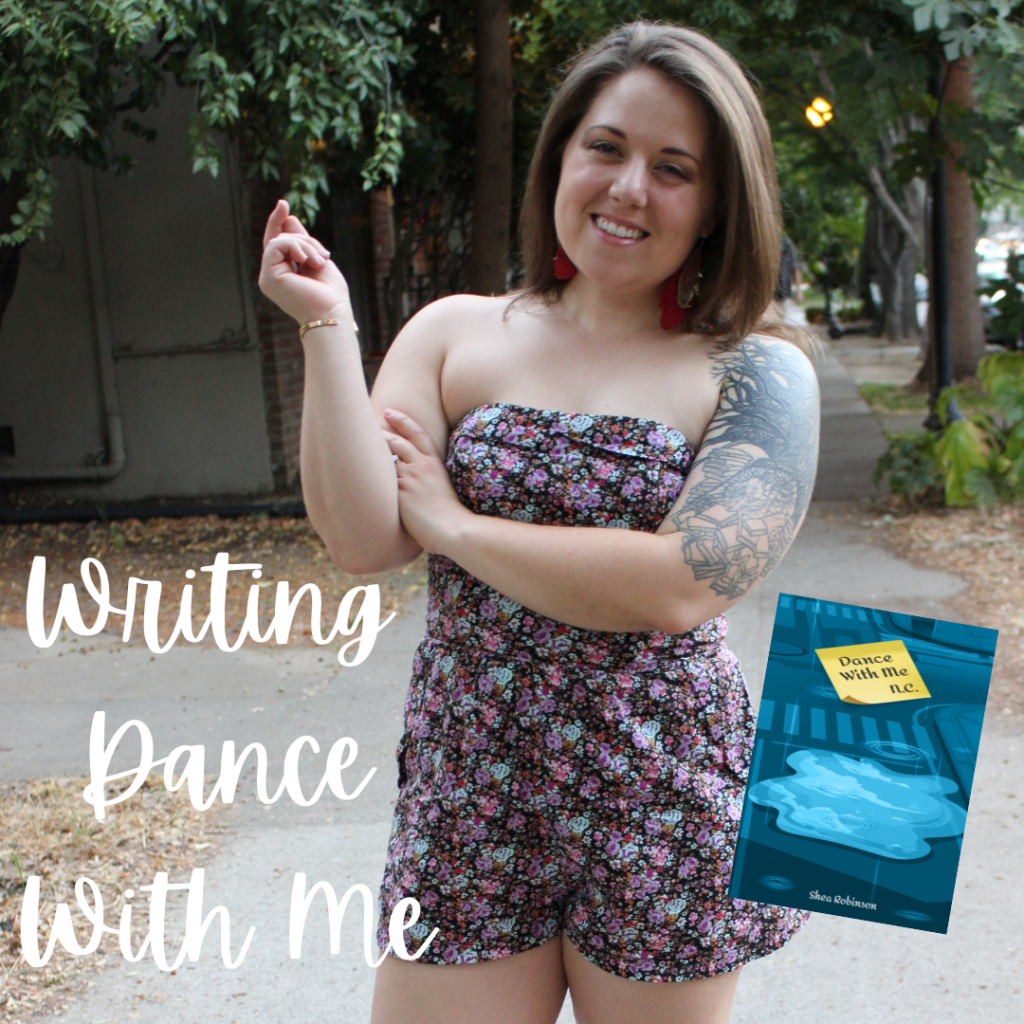
Publishing my novel has been 12 years in the making. Yes, you read that right! I’m as incredulous as you are. And what a labor of love this has been. Mostly, when people would say, “You wrote a book? That’s amazing!” I would shake my head and deny it. Writing is how I keep sane. Writing is how I breathe. So it didn’t feel right to take credit for something that felt so innate. But when I look at that number, it starts to feel real. All the revisions, all the time spent brainstorming, all the books on character development and editing, all the conversations with fellow writers, all the times I spent hiding from and then facing critiques, all the hours I spent figuring out who Charlie was and what she had to say. And finally, finally my publihsing moment had arrived.
2009
“We write from the world in which we live.” This was something I grew up hearing from my Nana. The actual quote is “Artists create from the world in which they live,” a phrase she used to highlight how art movements were born and why they mattered. As I try to piece together my writing journey, it comes down to what my world looked like.
And what I knew in 2009 was getting bullied at school, was feeling like I couldn’t speak the language of social circles, was feeling like there was something wrong with me for not fitting in. So I created Charlie, who was everything I wasn’t: she did cool things like dance hip-hop and speak multiple languages, she did courageous things like speak her mind and stick up for her friends, she believed in love and found the love she was looking for. I fleshed out Charlie’s story with my story, including the trauma and the people who had made my life difficult.
My book became my therapy. But it wasn’t a very good story. I had a good working title, A 30% Chance of Rain; I had a good cast of characters; I had an intriguing plot; but I was dragging it down by trying to stick too closely to “truth.” The task before me was learning to let the characters tell me where they wanted to go.
2010
I was writing consistently now. Churning out the words. Some big ideas were taking shape: what Charlie’s story was, the love she was missing and the way she thought that reflected her worth, who her friends were and how that shaped her life;-. Her best friend was Scott, a reckless boy who had her heart, who partied too much, who was the kind of broken she wanted to save; her arch nemesis was Rebecca, the Queen Bee at school, who seemed to exist just to make her feel inadequate; her mom was Aimee, someone Charlie called by her first name because she didn’t deserve the title of mom; her dad was dead; her little brother was Danny who was an adorable five-year-old and who had an imaginary friend named Oreo.
But I was writing scenes without any idea of how they fit together. Then one night, I was sleeping in this old rickety house, I don’t even know who’s, and BOOM, writer’s inspiration: I knew what my opening scene would be. I saw it like a movie. Scott and Charlie driving down the road. Charlie immensely happy. The stars watching the lovers laugh.
“And the tickle fight was on. He had both of her sides gripped between his fingers and she, her eyes squeezed shut, wheezed with laughter, tried desperately to remove his fingers from her body. But the truck was still moving. A truck resembling the one her dad drove until it deteriorated from this absence. That red three-seater side-step pick-up with the stick shift and the radio you had to bang to get working. The one with the black and white striped Tasmanian Devil seat cover.”
Those first 718 words kickstarted my story and gave me direction. The feeling was so startlingly clear and I used that to catalyze writing until the story was finished.
2011
While writing the full-length novel, I also paired down the main idea into a short story called “Mirror.” I don’t even know why I decided to call it “Mirror.” But people seemed to like it. I won at least three awards for it, both at school and in the community. This solidified my main plot. Now it wasn’t just a bunch of scenes haphazardly strung together. A story started to emerge. There was a love interest, name yet unknown, and there was an idea to bring my love of reading to the forefront. Charlie would speak to him only using the lines of her favorite books. He began as a UPS worker, someone who showed up to drop off a package but ended up giving her his number instead. It was romantic, it was curious, and it didn’t matter that no minor could work at UPS.
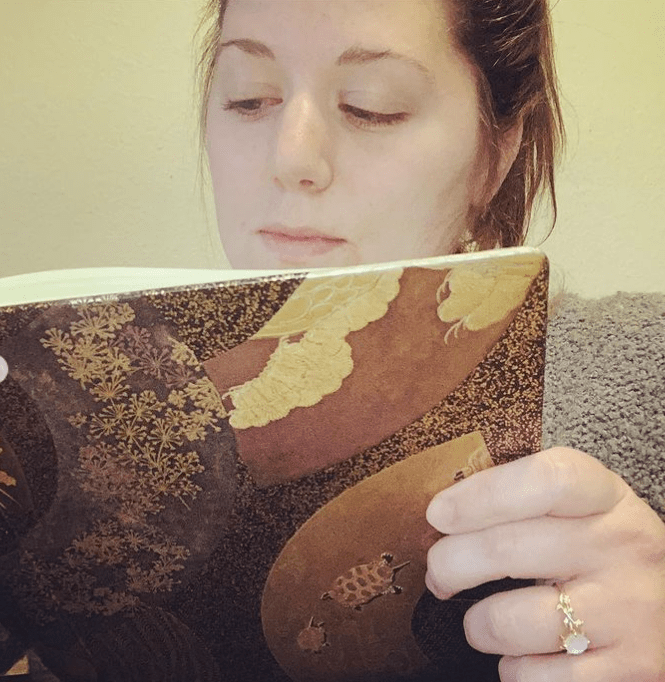
At that time, I was also given my first writing a journal which was instrumental in crafting my thoughts. I used and abused its pages. Everything from brainstorming new titles, advice on craft, early ideas for central themes of the story, and whole scenes went into this journal. I wrote and I daydreamed and processed and I crossed out and I scribbled and I used arrows to rearrange thoughts. Little by little the story was coming off the page and developing into something noteworthy.
2012
I had to finish the draft before I went to college if I was going to preserve Charlie’s high school voice. The point was to capture her there at that time. I had dropped the “30%” and my title was now A Chance of Rain which would then become Watertight based on this quote by Mark Helprin, in his work, Winter’s Tale.
“They cried because of the magic and the contradictions; because time had passed and time was left; because they saw themselves as if they were in a photograph that had winked fast enough to contradict their mortality; because the city around them had conspired to break a hundred thousand hearts; and because they and everyone else had to float upon this sea of troubles, watertight. Sometimes there were islands and when they found them they held fast, but never could they hold fast enough not to be moved and once again overwhelmed.”
I wanted to put readers into my story from the first page and I liked how authors included influential quotes at the beginning of their stories. Gave me an expectation of what I could expect to find in the book I was about to read. I dedicated the summer before college to finishing. I worked daily on tying up the loose ends and dotting my final periods. All told, the manuscript sat at 100,000 words. It didn’t matter that the typical young adult book was 50-75,000 words. Editing came later.
I had done it. I had set out to write a book and now it was sitting proudly on my desktop.
And people wanted to read it. Classmates and old friends. My high school’s librarian whom I was close to, and my best friends, Marlaina and Dominique. All the early beta readers and their thoughts would ultimately help me craft the second draft. But as I started college, I was assured that no matter the edits that were made, I had preserved Charlie’s high school emotions, thoughts, and lens on the world. No matter how I grew, I’d still be able to tell Charlie’s story and have it ring true for other sixteen-year-olds. I’d created a snapshot in time of my life that I’d have…forever. Whether I published or not. This now existed. It was like in writing this I had settled an old score.
2014-2019
From 2014-2019, I rewrote my manuscript seven times. I know it was seven revisions because every time I made substantial changes to the document, I saved a new copy. In 2014, my mom gifted me a paid editor to read my book. She wasn’t a YA editor, but she was a friend of family friend and was willing to review it. Getting your work critiqued can be hard to take, but it’s also an amazing opportunity for validation. This was the first person who was objectively assessing my work.
And she liked it. She said it was a great story overall with a few things for me to work on if I was interested. I listened and took her advice. I started reading books on character development and reading acclaimed novels to see how their characters developed, books like Elmore Leonard’s Rum Punch and John Fowles’ The French Lieutenant’s Woman. I took a hard look at my “backbone” and rewrote the narrative. I made Charlie a senior because she seemed more adult than a sophomore (this would change back to sophomore in later revisions).
I changed the opening scene. It was almost painful to do. This scene had gotten me started. This was the scene that had propelled me from sleep, forced me out of bed to furiously write it all down before I forgot. This scene encapsulated everything I had ever wanted to happen between Charlie and the boy she’s in love with. But this wasn’t a love story and it did nothing to drive the plot forward, so it needed to go. It also wasn’t exciting enough to draw the reader in and keep them reading. The new opening scene would be a party where several of the main characters would be introduced. It was lively, it was fun, and you got to know a little bit about Charlie.
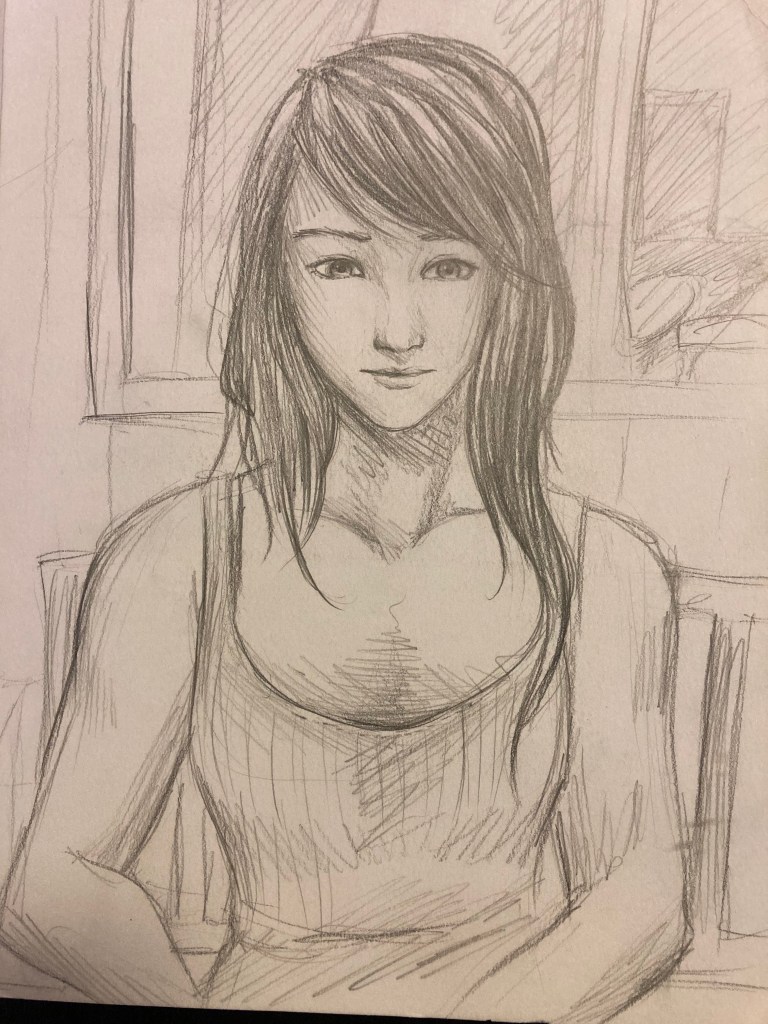
I commissioned a classmate in college to draw Charlie. She’d been living in my head for five years and there she suddenly was. Her sad eyes, just a sketch, her life not yet fully outlined.
In 2015, I printed out the manuscript single-sided (sorry future Shea) after reading that it helps to edit your work in a different format than you wrote it. Printing it and reading it out loud have both been tools that have helped my editing tremendously. And that was the first time I started over from scratch. I had too many competing subplots to weed through. I needed to write my book, from the first word to the last, and assess which scenes could stay and which had to go.
In 2018, I made a new friend at work who was also working on writing a book. We would go out to coffee, each get a chai latte and share a gluten-free whoopie pie. Then, we would sit for hours, until the coffee shop kicked us out, and talk about writing. We would do writing exercises and share them with each other. We would read each other’s writing and take turns giving feedback, pumping each other up about the lines that were excellently written, and asking each other questions that would help deepen the plot and the characters’ motivations. It was a thrilling experience. I’d never gotten to have direct feedback in real time from a reader before, nor had I ever had a friend who just “got me” as a writer. Who could give me feedback in the exact way I needed to hear it and was interested to read each new draft as I perfected my storytelling ability.
2019-2021
It’s crazy to think, but it’s true: from 2019-2021 I revised my manuscript six more times. The six revisions went something like this:
- I sat down with a friend who was an editor and he asked me, “What’s the point? Like what do you want readers to know when they finish your book?” And I couldn’t answer him. No surprise, he gave me a huge developmental edit.
- I rewrote the entire manuscript again, this time to adjust from third person to first person. Now you were in Charlie’s head.
- I reached out to a local publisher who was excited to work with me. We met for coffee and she gave me so much feedback on my manuscript and thoughts on marketing but we ended up parting ways because the manuscript still wasn’t ready.
- I rewrote the entire manuscript again, taking a hard look at where she said I’d been superficial.
- June 2020 I spent my birthday sitting by Collin’s Lake, refining, refining, refining my book
- I scratched everything and started over. Not even looking at the original notes. It felt like I’d finally found Charlie’s voice. I wrote the entire thing in a couple of days and when I finished, I knew this was “the” draft. I assessed my plot and subplot like character arcs. If they didn’t support Charlie’s story, they got cut. I rewrote the backbone. I chose a new title: Shades and Intonations, after one of my favorite Mark Zusak quotes from The Book Thief.
- “People observe the colors of a day only at its beginnings and ends, but to me it’s quite clear that a day merges through a multitude of shades and intonations, with each passing moment. A single hour can consist of thousands of different colors. Waxy yellows, cloud-spat blues. Murky darknesses. In my line of work, I make it a point to notice them.”
I was finally ready to publish. All it needed was a copyedit.
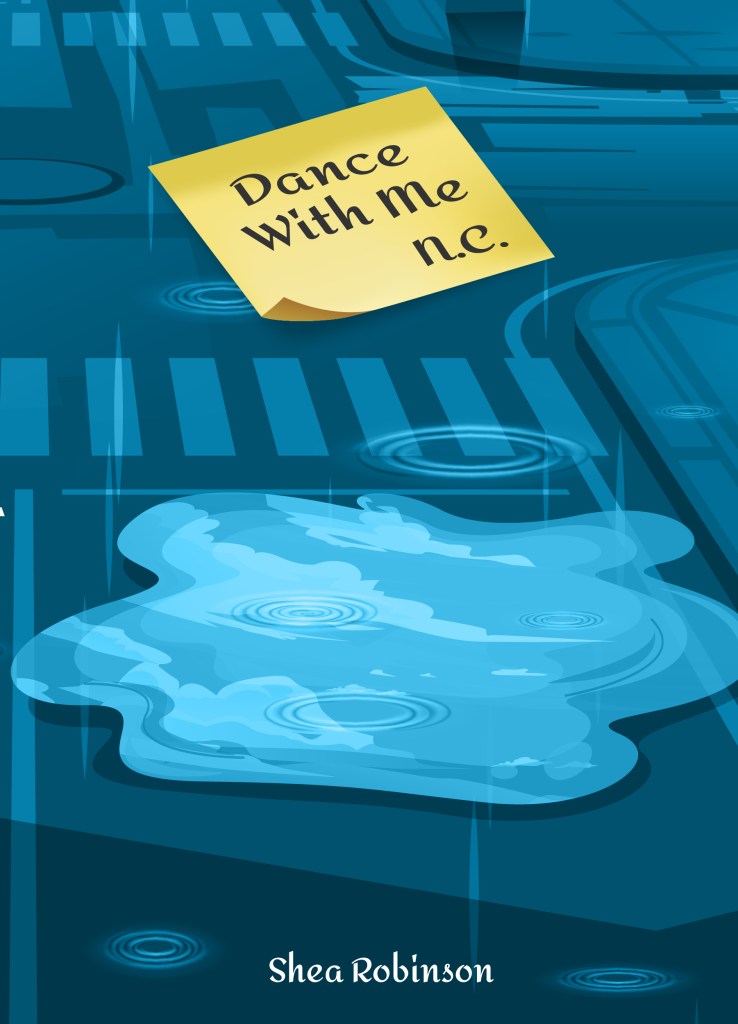
And my cover. I needed a cover that was intriguing without being heavy handed. That had all the metaphors but was also straightforward.
I needed to perfect my dedication. Yes, I’m the writer, but my publishing day was here and I’d be able to tell Charlie’s story because of the people who had shaped my story. These were the teachers and the friends and the loved ones who validated my efforts but also the bullies who took away my power and made me forget my voice. It was all real for me and it all became the story Charlie had to tell. And I had everyone to thank.
Oh, and I needed a handful of other things like the dust jacket, author bio, author photo, website…that would all be finalized in due time, but the dust jacket came first. After the title and the cover, the dust jacket was the next crucial piece that would help the reader decide to continue with their purchase.
“When my dad died, I didn’t know my mom was going to leave me too. It hurt like hell to lose him, but didn’t she know we could get through this together? I survived by dancing and reading. That is, until the Underground Poet left me a riddle straight from the pages of my favorite book. Suddenly, I was awake and excited. What was he trying to say and how would I reply? I know it seems crazy to fall for someone that I’ve never actually met, but he feels more real to me than the people I spend all my time with. For the first time in my life, it feels like I’m not so alone. Like he has offered me his hand and I’m accepting the next steps of the dance. Would you have done the same?“
Normally, I hate dust jackets because I think they do a terrible job of actually telling you what the book is about. (I actually go on a rant about it in my review of The Henna Artist, if you’re interested). They either give you all the juicy details and ruin the surprise, or they give you a bland overview that does nothing to prepare you for what the story is about. So for mine, I worked really hard to ensure it felt right. I put it in Charlie’s voice, rather than the usual third person, because all my previous drafts were terrible when they were in my voice. Who could better tell you what this story is about than Charlie in 20/20 hindsight? And she tells it to you straight: this is a book about trauma (what else would you call losing both of your parents) and how she uses books and dance to cope. And how fun it is to figure out life with a cute guide to help her.
Which brings us to present day! Now I have the delicious option to hold my book in my hands, feel the pages flutter against my palm, breathe in that new book smell and know that these are my words. I did this. And it feels awesome.
To purchase the e-book, navigate to the home page and find the link for either Amazon or Kobo. Stay tuned to purchase the print book.
 Elegance Press
Well, I lived on my writing and as a editor and professor of linguistics. For me, writing was just a job like every other job, nothing special. When I didn’t teach or assess other writer’s manuscript I just sat down and wrote. My writing was neither my therapy nor a release of my feelings. Writing was just writing for me not more not less – and it still is.
LikeLike