
When I first sat down to write Dance With Me, I had no idea what I was doing. I had a short story of about 8-10 pages that I knew I wanted to extend into a full-length novel, and that was it. So I started writing. 100,000 words later, I had my first draft that I thought was pretty good. That was 2016. I did a bunch of research, read a lot of writing books, became like a sponge, soaking up all I could about how to be a better writer and how to write a better a story. One of those nuggets of information was that the average YA novel is about 55,000-70,000 words. (You had to take out the outliers like Harry Potter and Twilight since they were Harry Potter and Twilight. I was writing a book, not the next mega-selling novel.)
So I began paring down my novel. As I did so, I tried to pay attention to scenes that needed fleshing out and characters that needed building up. I kept a document that I called simply “Removed pieces” where I kept everything that no longer made sense in the novel. All told, the “Removed pieces” document was about 100,000 words and my new story was around 60,000 words. Better. I created timelines for my characters to get a sense of how often they appeared in my book and what their character arc looked like. I edited more. I read literature books and studied the craft of dialogue to make my dialogue real and fresh. I edited more. I had editors in 2016, 2018, and 2019 read my story and give me fresh insight into all my plot holes. I went back to the drawing board each time, thought deeply about those holes and how to fill them, and then started over from page 1.
Now that I’ve written my second and third novels, I can tell you for sure that this is not the way to write a novel. There’s no wrong way to write a novel, but the way I went about writing my first was kind of like this meme.
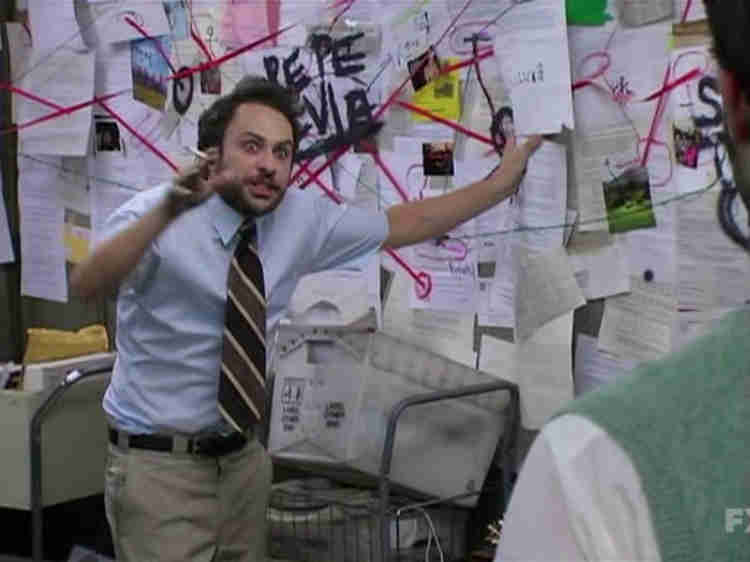
10/10 would not recommend. I wish I had Paula LaRocque with me from the start. You might remember her from way back in July 2019, when we learned about cleaning up our writing by avoiding vague qualifiers. Here’s what she has to say about how to write a story:
“When you write a story, you’re telling yourself the story. When you rewrite, your main job is taking out all the things that are not the story.”
I’ve also heard it said this way:
“The first draft is you telling yourself the story. The second draft is you telling your reader the story.”
1. We learned about writing the shitty first draft back in December. What your story is about, how you build your world, how you describe and define your characters, I’m not here to tell you how to do. What I can say is that you sit down to write, maybe with a writer’s group, maybe during a dedicated time each week, maybe during NaNoWriMo, and you find a way to put those words on the page. It doesn’t matter how the words sound or how much you hate it, what matters is that you keep writing.
2. Next step is to walk away. You cannot rewrite when you are close to your novel. Take that long anticipated deep breath and revisit a hobby you have put off. Take this opportunity to write another novel. But no matter what, do not, I repeat do not look at your shitty first draft for a minimum of 30 days. The longer you wait the more distance you will have from the characters and the easier your rewrite will be. Believe me, I know how hard this is. This is your baby and it’s taken you years to create. But give yourself this gift and resist.
3. When you’re ready to return 30 days, 60 days, 3 months later, read your draft as a reader. Turn off your editor brain and your writer brain and just read. You can make notes off to the side on things like when your concentration wavers or when you find yourself asking questions, but do not start marking up your document. Resist the urge to edit.
4. Now, look at your notes. Take a deep breath. It’s time to decide on where you’d like to go from here. Do you need to hone in where you’re trying to go and what you’re trying to say? Then, I’d suggest writing a synopsis. Are you ready for the next draft? Then, I’d suggest starting over from scratch. Are there specific scenes that you wrote superficially and now you’re ready to dive back in? Then, I’d suggest on taking those notes you wrote and spending a lot of time fleshing out those scenes.
*LaRocque, Paula. The Book on Writing: the Ultimate Guide to Writing Well. Grey & Guvnor Press, 2003. Pgs. 173-179
 Elegance Press